
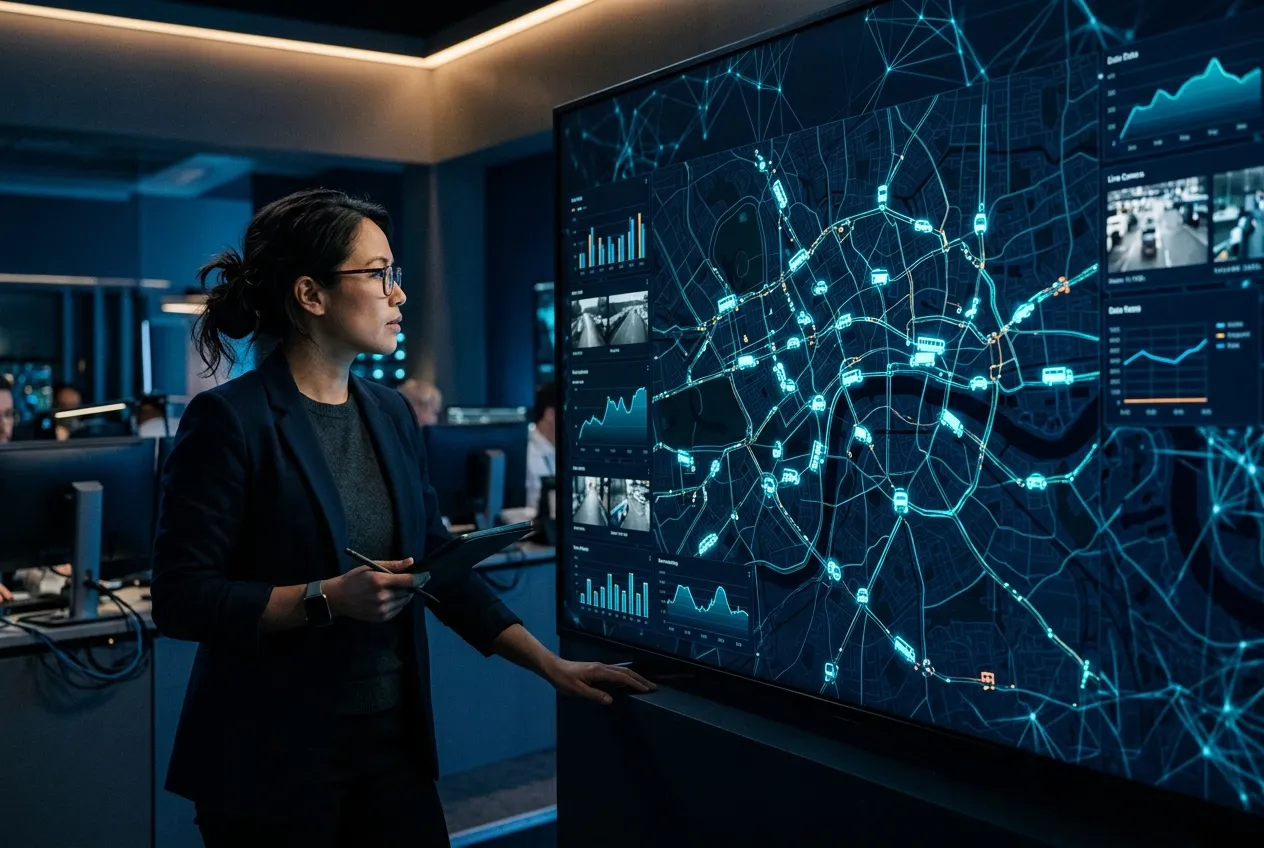
Every technology conference promises that AI will transform transportation. For operators running real fleets, the useful question is narrower: which applications work now, on the vehicles and data we already have? Here are ten that have crossed from pilot to production.
Ten practical use cases
- Predictive vehicle maintenance — AI analyses telemetry such as engine performance, temperature and vibration to flag potential failures before they happen.
- Driver behaviour analysis — harsh braking, acceleration, cornering and distraction patterns scored per driver and per trip.
- AI video telematics — cameras that classify events (phone use, fatigue, tailgating) instead of simply recording them.
- Accident and incident detection — automatic recognition of collisions and near-misses, with footage attached.
- Intelligent route optimisation — routes built from live traffic, time windows, vehicle capacity and driver hours.
- ETA prediction — arrival estimates that learn from historical performance rather than map distance alone.
- Delivery-demand forecasting — predicting volumes by area and day to plan vehicles and shifts.
- Automated exception management — the system raises only the trips, vehicles or orders that need a human.
- Fleet utilisation optimisation — identifying under-used vehicles and right-sizing the fleet.
- AI transportation copilots — conversational assistants that answer operational questions in plain language.
The question that changes everything
The first nine use cases make existing processes faster or safer. The tenth changes how operators work. Imagine a fleet manager who can simply ask:
Which vehicles are under-utilised today, why are deliveries late, and which drivers need attention?
Answering that requires more than a chatbot. It requires telematics, video, dispatch and maintenance data to be connected and clean enough for an AI layer to reason across them. That is why conversational interfaces are the end of the journey, not the beginning.
Where to start
Most operators do not need all ten at once. The sensible path is to pick the one or two use cases tied to a real cost — accidents, breakdowns, failed deliveries — confirm the data exists to support them, and build the integration foundation that lets the others follow.
Two cautions are worth stating. First, AI is only as good as the signals it receives: a video analytics model cannot flag fatigue from a poorly positioned camera, and a maintenance model cannot predict failures from a telematics device that reports once an hour. Hardware selection and installation quality decide much of the outcome before any algorithm runs. Second, every AI alert should land in a workflow. An exception that nobody owns is noise; an exception routed to the right dispatcher, supervisor or workshop with the evidence attached is an operational improvement.
Operators who approach AI this way — requirement first, data second, model third, workflow fourth — tend to see results within a single operating season rather than waiting on a multi-year transformation programme.
Wexoz supports this through transportation AI consulting, IoT and video AI deployment and logistics automation — selecting and integrating the platforms that fit each operation.
Have a related requirement? Let's design the right solution for it.