
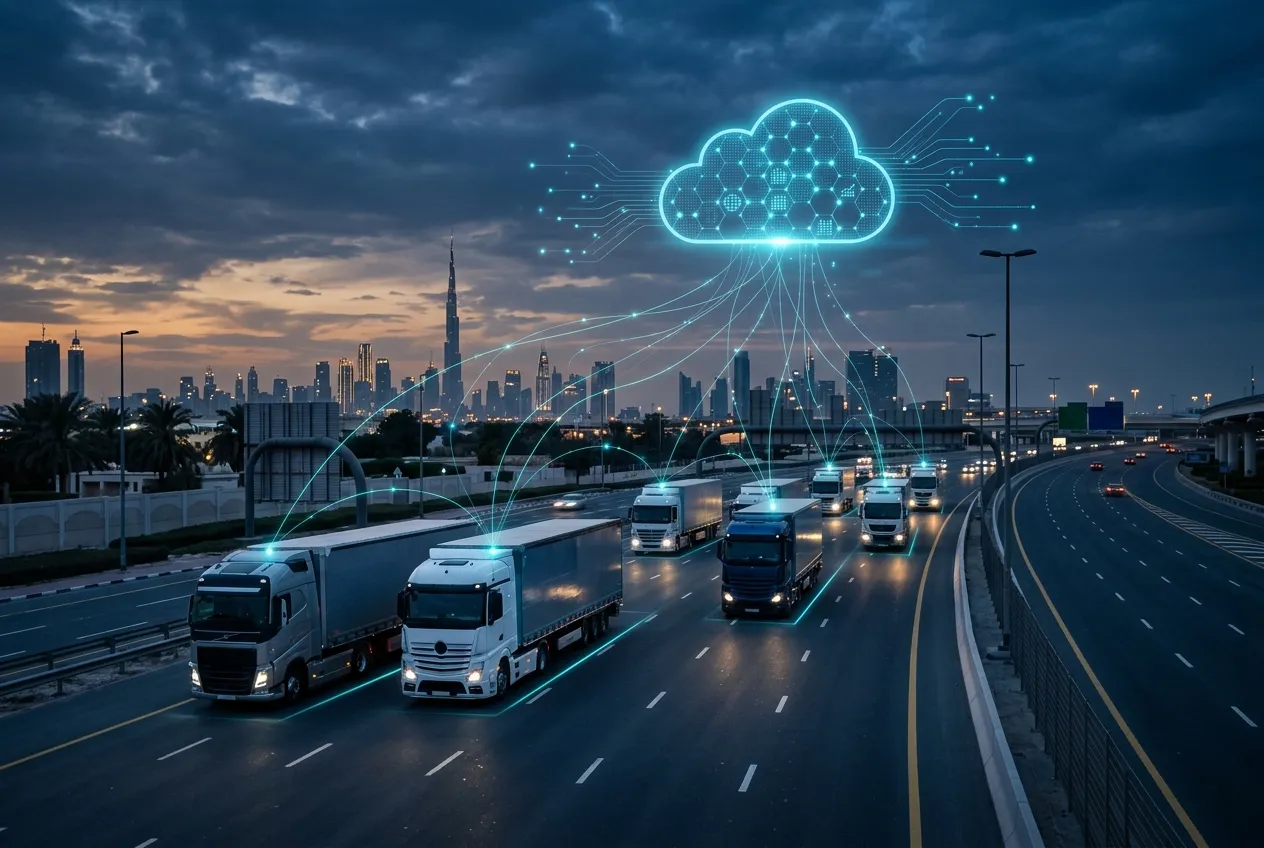
The Future of Transportation Is Connected: From GPS Tracking to Intelligent Fleet Operations
Fleet management is moving from a tracking system to an operational intelligence layer. Here is how we got here — and where it goes next.
For most of the last two decades, fleet technology answered a single question: where is my vehicle? A GPS unit, a SIM card and a map were enough. That question still matters, but it is no longer the one that decides whether a transportation operation runs well. The question today is: what should I do next?
Three generations of fleet technology
The first generation was GPS tracking — location, speed and a trail of breadcrumbs. The second was telematics, which added the vehicle itself to the picture: ignition, engine data, fuel, diagnostics and driver identification. The third generation is IoT fleet management, where vehicles, sensors, cameras and drivers become connected nodes feeding a single operational platform.
- Real-time fleet visibility across every vehicle, route and site
- Driver behaviour and safety scoring from harsh-event and distraction data
- Predictive maintenance based on live diagnostics rather than fixed schedules
- Fuel and asset utilisation measured continuously, not estimated monthly
- Video telematics that pairs each event with the footage that explains it
From data to decisions
Connecting everything produces a great deal of data. On its own that is a burden, not a benefit. The shift that matters is the arrival of AI-driven decision support: systems that correlate telemetry, video and operational context and surface the handful of things an operator should act on today — the vehicle that will fail before the weekend, the driver whose risk profile changed this week, the route that keeps running late for a reason nobody has noticed.
Fleet management is moving from a tracking system to an operational intelligence layer.
AI-powered video telematics and connected-fleet technology have already become mainstream areas of fleet investment. The organisations seeing the most value are not the ones with the most devices; they are the ones whose devices, platforms and business systems are integrated well enough for intelligence to flow across them.
What this means for operators
The practical implication is that fleet technology can no longer be bought as a single product. A modern operation needs telematics hardware, sensors, cameras, a fleet platform, AI analytics and connections into the business — specified together, deployed together and supported together.
It also changes who is involved. Fleet technology used to sit with the transport supervisor. Today it touches safety, HR, finance, customer service and IT, because the same connected data informs driver coaching, payroll, cost-per-kilometre, delivery promises and cyber-security. Operators who recognise this early design their technology stack as shared infrastructure rather than a departmental tool, and avoid the familiar outcome of five disconnected systems that each hold a fragment of the truth.
Finally, connectivity raises the bar on reliability. When dispatch, compliance reporting and customer notifications all depend on live vehicle data, a device that drops offline or a platform that lags is no longer a minor inconvenience. Monitoring, support and continuous optimisation become part of the solution, not an afterthought.
That is the role Wexoz plays: a transportation technology systems integrator bringing IoT fleet management, telematics, CCTV, sensors and AI into one connected operation, designed around the customer's requirement rather than around any single vendor.
Have a related requirement? Let's design the right solution for it.